
Brownstones, row houses and pre-war buildings
Whole House Rewiring in Brooklyn
Replace knob-and-tube, cloth-insulated and overloaded wiring with a safe, modern, inspected electrical system built for how you live now.
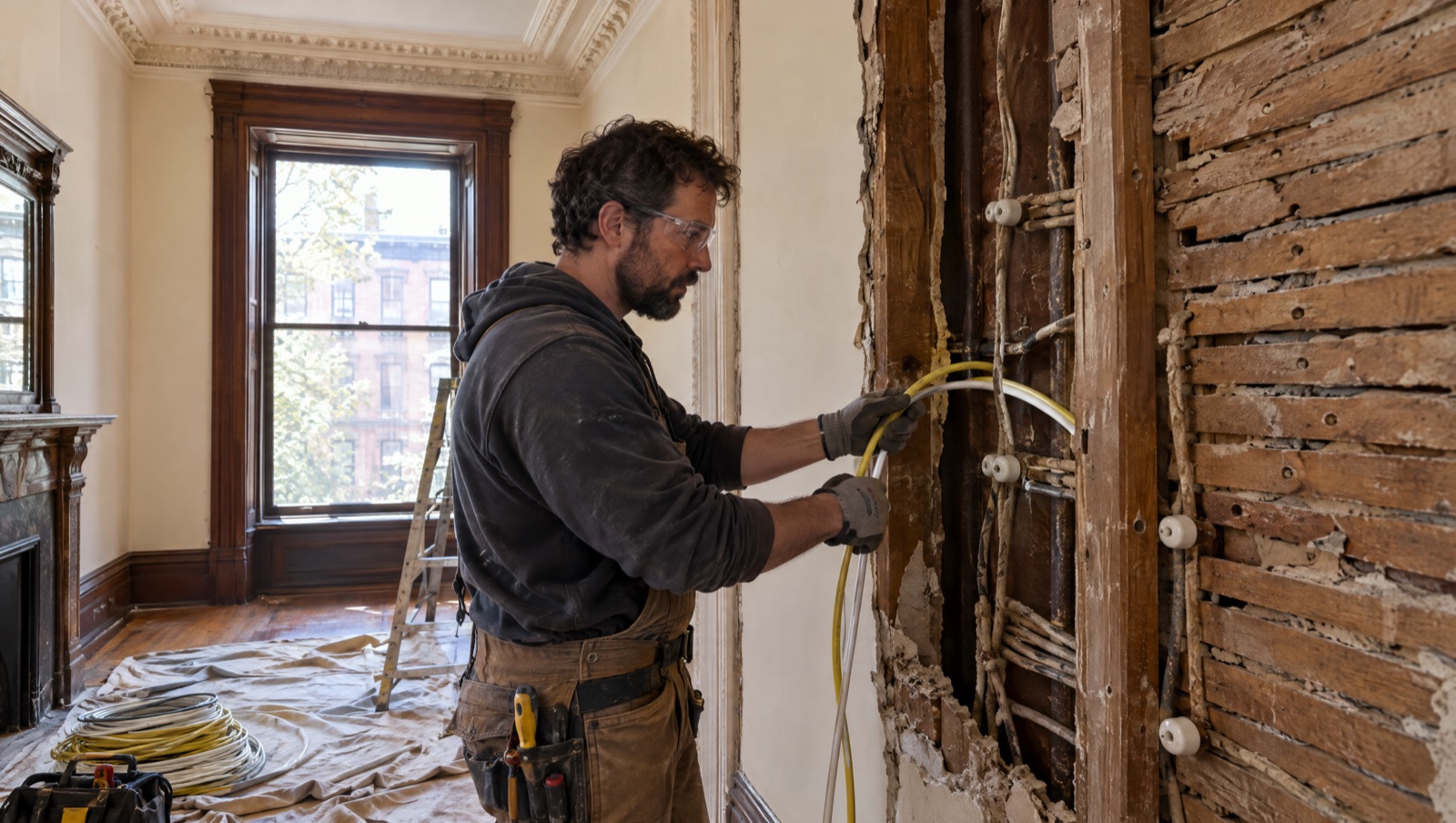
Kings County Electric provides whole house rewiring in Brooklyn for brownstones, limestones, frame row houses and pre-war apartment buildings. We replace aging wiring room by room or floor by floor, upgrade the service when the house needs more capacity, and file the permits so the new system is inspected and on record.
Brooklyn’s housing stock is beautiful and old. Many homes in Park Slope, Crown Heights, Bed-Stuy and Prospect Lefferts Gardens still run on wiring installed generations ago, patched by whoever owned the house in between. Rewiring an older home is the single best electrical investment for safety, insurability and resale, and it is one of the core residential electrician services we offer across the borough.
Pre-War Experience
Plaster, lath, brick party walls and tall ceilings.
Room-by-Room Plans
Phased rewiring so you can stay in the house.
Permits and Inspection
Filed with NYC DOB and inspected before close-up.
Respect for Detail
We protect moldings, floors and original trim.
When Does a Brooklyn Home Need Rewiring?
Wiring does not last forever. Rubber and cloth insulation turns brittle with age and heat, connections loosen, and decades of renovations leave splices buried in walls with no junction box. None of that shows from the outside until a breaker keeps tripping, a fixture flickers or an outlet gets warm.
An old wiring system can also hold up a sale or a renovation. Insurers and lenders often ask about knob-and-tube, and a gut kitchen or bath usually triggers new work that has to tie into a safe system. If you are planning a renovation, rewiring while the walls are open saves real money.
We start with an inspection of the panel, a sample of outlets and fixtures, and the basement and attic runs. You get a plain-English report of what we found and what we recommend, whether that is a full rewire or targeted repairs.
Warning signs we see in Brooklyn homes
- Knob-and-tube wiring with porcelain knobs in the basement or attic
- Cloth or rubber insulated wire that crumbles when touched
- Two-prong ungrounded outlets throughout the house
- A fuse box or a panel with double-tapped breakers
- Breakers that trip when the microwave and air conditioner run together
- Warm switch plates, buzzing outlets or a burning smell
- Extension cords and power strips doing the job of real outlets
What Whole House Rewiring Includes
Every rewiring project is planned around the house, the family living in it and the walls we have to work through. A typical scope covers:
New Circuits and Wiring
We remove or abandon old branch circuits and run new copper wiring, usually armored cable or conduit, which is the standard for most New York City buildings. Kitchens get dedicated small appliance circuits, and bathrooms, laundry and air conditioning get circuits sized for the load.
Panel and Service
Old fuse boxes and undersized panels are replaced so the new wiring has room to grow, from a heat pump to an EV charger.
Grounded Outlets and Switches
Three-prong grounded outlets, GFCI protection in kitchens and baths, and AFCI protection where the code requires it.
Life Safety
Close-Up and Records
Rough-in inspection before walls close, final inspection after, and a labeled panel directory so you know what every breaker feeds.
How We Rewire a Brownstone or Row House
Rewiring an occupied home takes planning. This is the order we follow on most Brooklyn projects.
Inspection and Plan
We trace the existing circuits, check the service, and map new circuits, outlet locations and lighting with you, floor by floor.
Permit and Prep
We file the electrical work with the city, protect floors and furniture, and schedule phases so you keep power in the rooms you are using.
Rough-In and Inspection
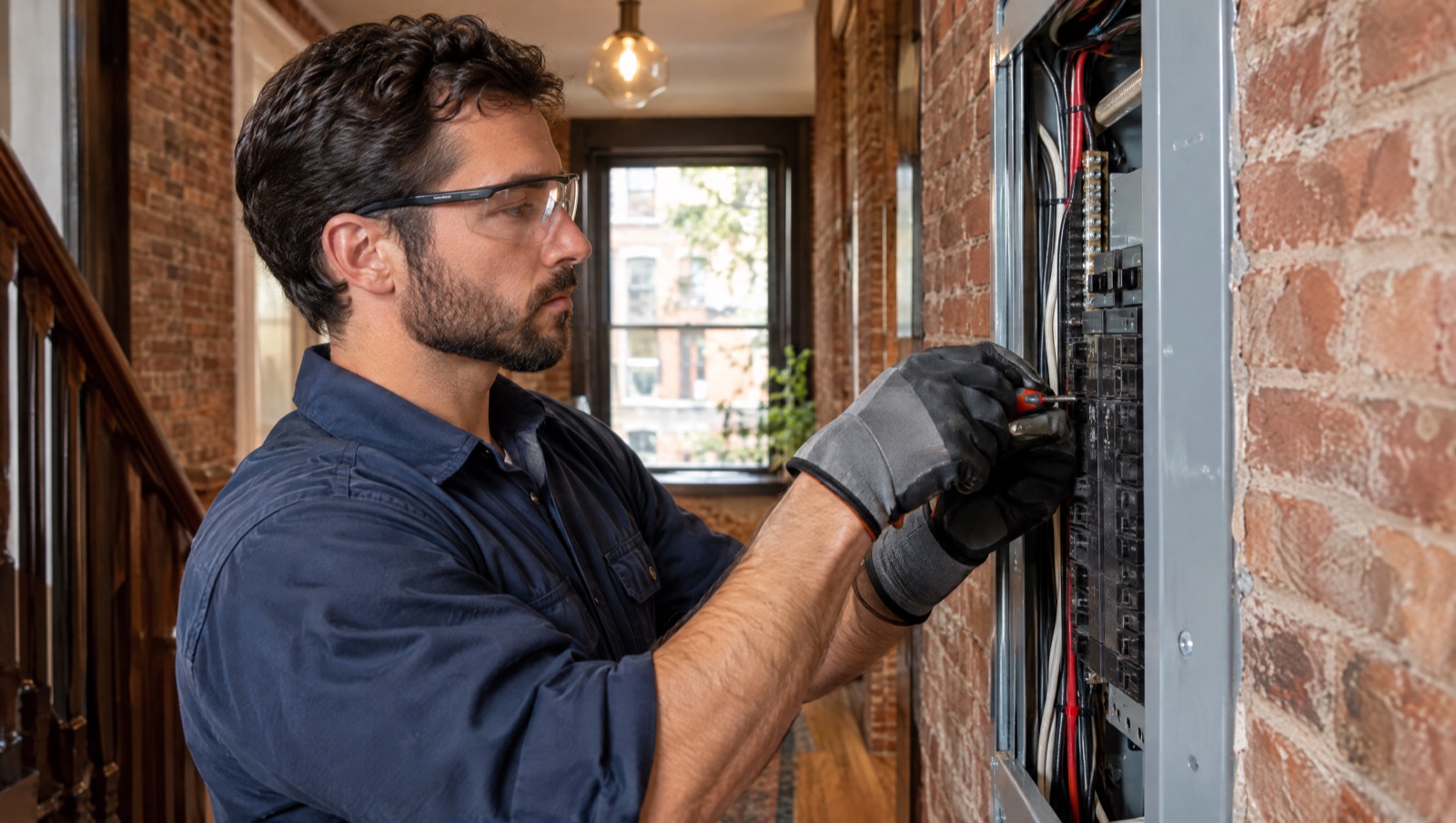
We fish new wiring through walls and ceilings with as few openings as possible, install boxes and the new panel, then call for the rough-in inspection.
Finish and Sign-Off
We set devices and fixtures, energize and test every circuit, pass the final inspection and hand you a labeled panel and a clean house.
Rewiring Without Gutting Your Walls
Most of our rewiring jobs in occupied Brooklyn homes are done by fishing new cable through existing walls, floors and ceilings. We use the basement, attic, closets and chases to reach each floor, and open small, neat access holes only where we have to.
Plaster and lath walls, brick party walls and decorative ceilings take patience, and our electricians have spent years working inside them. We patch our access openings so they are ready for paint, and if you are already renovating, we coordinate with your contractor so the wiring goes in before the walls close.
Old Wiring Won’t Fix Itself
Knob-and-tube and cloth wiring only get older. The best time to replace them is before a failure, not after.
Book an inspection and we will tell you, honestly, whether your home needs a full rewire, a partial rewire or just a few repairs. The quote is free and there is no pressure.
Whole House Rewiring FAQ
Common questions from Brooklyn homeowners planning a rewire. Call (646) 450-9911 for anything not covered here.
How much does it cost to rewire a house in Brooklyn?
Cost depends on the size of the home, the number of floors and circuits, how accessible the walls and ceilings are, whether the service and panel need replacing, and how much finish work is involved. A two-family brownstone is a very different job from a single-floor apartment. We provide a detailed, written quote after an on-site inspection, and the estimate is free.
How long does whole house rewiring take?
A small apartment can take a few days. A full brownstone or row house usually takes a few weeks of on-site work, plus permit and inspection time set by the city. Phased jobs in occupied homes take longer than vacant renovations. We give you a realistic schedule before we start.
Can I live in the house while you rewire it?
In most cases, yes. We work floor by floor or room by room, keep at least some circuits live each day, and clean up before we leave. Some steps, like switching over to the new panel, need a short planned shutdown that we schedule with you.
Is knob-and-tube wiring illegal in NYC?
Existing knob-and-tube is not automatically illegal, but it was never designed for modern loads, it has no ground, and it becomes dangerous when it is buried in insulation or spliced into newer wire. Many insurers and lenders treat it as a problem. New work cannot extend it, so most owners replace it when they renovate or sell.
Do you need to open every wall to rewire a house?
No. We fish new wiring through existing cavities and use basements, attics and closets wherever possible. Some small openings are unavoidable, especially at the panel and at hard turns, and we patch them so they are ready for paint.
Do I need a permit to rewire my house?
Yes. Rewiring is electrical work that must be done by a licensed electrician and filed with the NYC Department of Buildings, with inspections before and after the walls are closed. We take care of the filing and the inspections.
Will rewiring let me add central air, an EV charger or a new kitchen?
That is one of the biggest benefits. When we rewire, we plan circuits and panel capacity for the loads you have now and the ones you are planning, including EV charger installation, heat pumps and induction cooking.
Plan Your Whole House Rewiring
Tell us about your home, its age and what is going on with the wiring. We will schedule an inspection and give you a free, upfront quote.
Open 24 hours Monday through Saturday. Sunday 8:30 AM to 2 PM. 347 Rogers Ave, Brooklyn, NY 11225.